How to Get a Vending Machine for Your Office Without Buying One [Aug’26]
July 28, 2026Vending Machine Rental Agreement in India: 12 Things to Check Before You Sign [Aug’26]
August 20, 2026
For most workplaces, a single combination snack-and-beverage machine per floor, or roughly one machine for every 100 to 150 employees, is a sensible starting point — treat it as a working guideline, not a fixed formula. The right count depends on how your floors are laid out, how staggered your shifts are, and how far people have to walk to reach a break area. Most facility teams start with one machine per zone, watch how fast it empties in the first few weeks, and add from there.
Start with headcount, not guesswork
The most common mistake in sizing an office vending setup is picking a number before looking at the floor plan. Headcount is a useful starting point, but it only works as a rough divisor. A common starting point admin teams use is one machine per 100 to 150 people on a single floor, assuming a normal 9-to-6 pattern with one or two break windows. If your office runs shifts, or has a large chunk of staff working from a factory floor or a call-center bay rather than desks, that number can shift up or down.
Rather than trying to calculate a perfect ratio, a more reliable approach is to size for the busiest 30-minute window of the day rather than the average. An office with 200 people who all break for tea between 4 and 4:30 pm needs more throughput than an office with 200 people spread across four staggered shift breaks, even though the headcount is identical. If you’re unsure where to begin, a corporate vending solutions consultation can help walk through your specific floor plan before you commit to a count.
Single floor vs multi-floor offices
Single-floor offices are the simplest case: one central machine, placed where the most people naturally pass by, usually covers a small-to-mid-size team comfortably. As soon as an office spans multiple floors, the calculus changes, because people are reluctant to change floors just to buy a snack or a bottle of water.
As a working rule, most multi-floor offices are better served by placing at least one machine per floor rather than concentrating two or three machines on a ground-floor cafeteria. The lobby machine still has a role — it catches visitors, vendors, and staff on their way in or out — but it shouldn’t be the only access point for people working three floors up. Large campuses with several buildings should think of each building as its own sizing exercise rather than one number for the whole site.
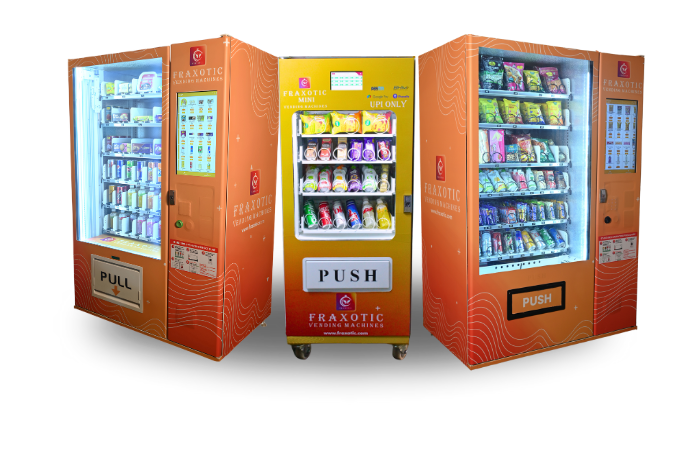
If floor space is at a premium on upper floors, a compact model like the Mini can sit in a smaller footprint than a full Snacks & Beverage unit, while still giving that floor its own access point instead of relying on people traveling down.
Break room, lobby, or both — placement matters as much as count
Two offices with the same headcount and the same number of machines can have very different outcomes purely because of where the machines sit. A machine tucked into a break room competes with a kettle, a fridge, and habit — usage tends to be steady but modest. A machine placed near a high-traffic point, like a lift lobby, a stairwell landing, or the path between meeting rooms and desks, tends to see more impulse use simply because people walk past it multiple times a day.
For offices deciding between the two, a reasonable pattern is: one machine anchored in or near the main break room for planned use, and a second one (once headcount justifies it) in a high-footfall zone for the ad-hoc, “I didn’t realize I was hungry” purchase. Avoid placing a machine somewhere it competes directly with a subsidized cafeteria counter selling the same items — it will underperform there regardless of how good the machine is.
Visitor-heavy offices — client-facing floors, reception areas, government offices with public footfall — often benefit from a machine in the lobby even if the internal headcount alone wouldn’t justify one, simply because it’s serving a different audience than staff.
Get the snack-to-beverage mix right
Office vending performs best with a mixed machine rather than a snacks-only or beverage-only unit, because the two categories serve different moments in the day — beverages get bought steadily through the morning and afternoon, snacks spike around the mid-morning and late-afternoon slump. A combination Snacks & Beverage machine, or a Cashless Combo unit where payment friction is the bigger concern, covers both without needing two separate machines in the same spot.
For offices that want a more premium unattended experience — client floors, executive areas, or spaces where the vending machine is also part of how the space looks — the Luxury range with a 22-inch touchscreen presents the product range more like a retail display than a standard vend-and-drop unit. For anything fragile — glass-bottled beverages, delicate packaging — the Elevator range uses a gentle-drop delivery mechanism instead of the usual coil-drop, which matters more than most facility teams expect once the first cracked bottle shows up in a complaint.
What actually goes into the machine — brands, pack sizes, price points — stays entirely in the client’s hands under a dry rental setup, since the office (usually through its existing pantry vendor) stocks and refills its own products.
The space and power checklist before you sign
Before finalizing a count or a location, walk the floor with this checklist:
- About 3×3 ft of clear, level floor space per machine, with room to open the front panel for restocking and servicing
- A standard 16 Amp power socket within reach — not a shared extension board already carrying other equipment
- Enough clearance around the machine that it isn’t blocking a fire exit, corridor, or accessibility path
- A spot visible enough that staff notice it, but not so exposed that servicing becomes disruptive during work hours
Preventive maintenance is carried out half-yearly and is included in the rental — worth confirming this is in writing with whichever operator you go with, since maintenance is often the line item that gets glossed over verbally and disputed later.
Why most offices rent rather than buy
Buying a vending machine outright means owning a maintenance problem along with the hardware — coil jams, card reader faults, refrigeration issues, and the eventual hardware refresh all become the office’s responsibility, usually falling on a facilities team that has neither the parts nor the training to fix it quickly. That’s before accounting for the upfront capital outlay tying up budget that could go elsewhere.
A dry rental model avoids both problems: the office pays a fixed monthly rent for the machine and its maintenance, keeps full control over — and 100% of the revenue from — whatever products it stocks, and isn’t on the hook for repairs. If a machine breaks down, that’s the operator’s problem to fix against a written SLA, not a facilities ticket that sits unassigned for a week. For a side-by-side of what ownership actually costs versus renting, see office vending machine without buying.
A written SLA is the part worth reading closely before signing anything — look for a stated uptime percentage, a defined response window for critical issues, and a resolution timeline, rather than vague language like “prompt support.”
What it actually costs
Under a dry rental arrangement, machine + maintenance rent starts from ₹15,000 per machine per month plus GST as a floor — the final number depends on the machine model and the site, so a Mini in a small satellite office won’t cost the same as a Luxury touchscreen unit on a client-facing floor. Rentals typically run on a 12-month minimum agreement with monthly billing, the machine stays the property of the operator throughout, and a deposit may apply. Transportation and on-site installation are charged separately from the monthly rent.
Multiply the per-machine floor rate by however many machines your floor plan and headcount work out to, and that gives a realistic monthly budget line before you go into negotiations. For a fuller breakdown of what drives the price up or down by machine type and city, see vending machine rental price in India. Fraxotic has been deploying vending machines since 2019, with 1,000+ machines currently deployed across offices, government bodies, colleges, and large institutions in cities including Pune, Mumbai, Navi Mumbai, Thane, Nashik, Nagpur, Bangalore, Delhi NCR, Hyderabad, Chennai, Ahmedabad, and several others — including GeM-registered government procurement.
Frequently asked questions
How many vending machines does a 200-person office need?
As a working starting point, one combination snack-and-beverage machine per 100 to 150 employees is common, so a 200-person office on a single floor often starts with one or two machines. If that headcount is spread across multiple floors, a machine per floor tends to work better than concentrating both machines in one place.
Should vending machines go in the break room or the lobby?
Both locations serve different purposes. Break rooms capture planned, routine use; high-traffic zones like lift lobbies or corridors capture impulse purchases. Larger offices often benefit from one machine in each type of location rather than choosing only one.
Is it better to rent or buy a vending machine for an office?
Renting under a dry rental model avoids the upfront capital cost and the maintenance burden of ownership — the operator handles servicing against a written SLA, while the office keeps 100% of product revenue since it stocks and refills its own machine. Most offices find this more practical than owning hardware they aren’t equipped to repair.
How much floor space and power does a vending machine need?
Plan for about 3×3 ft of level, clear floor space, plus a standard 16 Amp power socket close enough that the machine isn’t running off a shared extension board. Leave enough clearance around it that it doesn’t block a corridor or fire exit.
What does an office vending machine rental cost per month?
Rent starts from ₹15,000 per machine per month plus GST as a floor, with the final figure depending on the machine model and site. Transportation and on-site installation are billed separately, and agreements typically run on a 12-month minimum with monthly billing.
Who stocks the products in a rented vending machine?
Under a dry rental model, the office stocks and refills its own machine — often through its existing pantry vendor — and keeps 100% of whatever the machine earns. The operator’s role is limited to the machine and its maintenance, not the products inside it.
What happens if the vending machine breaks down?
Under a written SLA, critical issues should be acknowledged within a few business hours, with an on-site visit typically committed within 24 hours in metro cities and 48 hours in non-metro locations, and resolution targeted within a few business days. Always confirm these numbers are written into the agreement rather than assumed.
If you’re trying to work out the right number and placement for your own office, the fastest way to get a straight answer is to walk your floor plan with someone who does this daily. Explore vending machines on rent, see the full range under corporate vending solutions, or message us directly on WhatsApp or at wecare@fraxotic.com for a site assessment.