How Many Vending Machines Does Your Office Need? [Aug’26]
August 20, 2026PPE Vending Machines in Indian Factories: How Controlled Dispensing Works & Why Plants Rent Them [Aug’26]
August 20, 2026
The two clauses that decide whether a vending machine rental works out are simple to check and easy to skip: what does the monthly rent actually cover — machine plus maintenance only, or does the vendor also stock the product and take a cut of it — and is the uptime and service response commitment written into the contract with numbers, or is it a verbal promise. Everything else in the agreement (lock-in, deposit, GST, ownership) matters, but these two determine whether the machine is a working asset or a slow-moving headache.
What does the rent actually cover?
Vending rental offers in India generally fall into two structures, and admin teams comparing quotes often don’t realise they’re comparing apples to oranges.
1. Machine + maintenance vs full-service with refilling
In a dry rental model, the vendor rents you the machine and handles its maintenance. You stock and refill your own products — tea, coffee, snacks, whatever fits the machine — and you keep 100% of whatever the machine sells for. There’s no revenue share because there’s no product revenue changing hands with the vendor at all.
In a full-service model, the vendor also stocks the machine, collects cash or UPI revenue, and pays you (or bills you) on some split. Some fully-managed operators advertise lower headline rents but stock the machine themselves and keep the product margin — which usually means a lower monthly number on paper and a smaller share of what the machine actually earns. Neither structure is wrong. The problem is comparing a dry-rental quote against a full-service quote as if they were the same line item. See the side-by-side on dry rental vs. rental with refill before you shortlist vendors.
2. Who stocks the machine, and who keeps the product revenue
Ask this directly, in writing: after the machine is installed, who buys the stock, who refills it, and who keeps what the machine collects? In a dry rental — Fraxotic’s standard model — that answer is you, you, and you. The vendor’s income is the flat rental fee, nothing more. If a vendor’s contract is vague on this point, assume it means a revenue share you haven’t been told about yet.
Get the uptime promise in writing
A vending machine that’s down for a week isn’t saving anyone money, no matter how cheap the rent is. This is the section most contracts leave soft — don’t let it stay soft in yours.
3. Uptime commitment — a number, not a promise
Ask for a written SLA with an actual percentage. Fraxotic’s written terms commit to 99.58% monthly uptime. If a vendor’s proposal says “we’ll make sure it’s always running” with no figure attached, that’s not an SLA — it’s a sales line. A number in the contract is something you can hold them to; a verbal assurance is something you remember differently six months later.
4. Response and resolution times — and how they’re measured
Two machines can have the same SLA on paper and very different real-world experiences depending on how the clock runs. Check:
- How fast is a critical issue acknowledged after you report it?
- How fast does someone show up on-site?
- How long until the issue is actually resolved?
- Are these times measured in business hours or calendar hours? A “48-hour resolution” that only counts working days can mean a machine sits broken over a weekend without breaching anything.
Fraxotic’s written terms: critical issues acknowledged within 4 business hours, on-site within 24 hours for metro locations and 48 hours for non-metro, and resolution targeted at 48–72 business hours, measured on working days. Ask your vendor for the equivalent numbers and get them into the contract, not just the sales deck.
5. Preventive maintenance frequency
Reactive-only service (someone shows up after something breaks) costs you more downtime than a vendor who visits proactively. Check whether preventive maintenance visits are included in the rent, and how often they happen. Fraxotic includes half-yearly preventive maintenance visits at no extra charge as part of the standard rental.
Contract term: lock-in, exit, and ownership
6. Lock-in length and exit notice
Every rental agreement has a minimum term — check how long it is and what happens if your requirement changes before it ends. Also check the exit notice: how much notice do you have to give before the contract can end, and does that notice period only start after the lock-in is over? Fraxotic’s standard terms run a 12-month minimum lock-in with monthly billing, followed by a 2–3 month exit notice once the lock-in period is complete.
7. Who owns the machine
In a rental agreement, the machine typically remains the vendor’s property throughout — you’re renting the equipment, not buying it. That’s normal and expected. What matters is that it’s stated clearly, so there’s no ambiguity later about who’s responsible for the asset itself versus who’s responsible for the space it sits in and the products inside it. Confirm the floor space and power requirement too — a standard machine needs roughly 3×3 feet of floor space and a 16 Amp socket, worth checking against your site before signing anything.
8. Deposit — and what it actually secures
Ask what the deposit is for (damage, non-payment, early termination — or all three), whether it’s refundable, and under what conditions it gets adjusted or returned. A deposit is standard practice, applied as per the vendor’s terms — the point is to get the specifics in writing rather than assuming.
The line items that surprise people later
9. Transportation and installation charges
These are commonly charged separately from the monthly rent, and they’re easy to miss when you’re comparing headline rental figures. Ask upfront whether transport and installation are extra, and get the amount before you sign — not after the machine arrives. For a fuller sense of how these pieces typically add up, see vending machine rental price in India.
10. GST invoicing
Confirm the vendor issues proper GST invoices for the rental and for any deposit or one-time charges. This matters for your own accounting and input credit, and it’s a reasonable baseline expectation from any registered vendor rather than something you should have to negotiate for.
11. What happens when the machine breaks — spares and replacement
Beyond the response-time SLA, ask what actually happens on a repeat or unresolvable fault: does the vendor carry spares locally, or does a part have to be ordered in? Is a loaner or replacement machine an option if a fault can’t be fixed within the resolution window? A vendor who can answer this specifically has a real service operation behind the SLA; a vague answer is a sign the SLA number is aspirational.
Buying for a government office?
12. GeM registration and the procurement route
If you’re procuring for a government department or PSU, check whether the vendor is GeM-registered — this is usually the required route for government vending contracts and affects how the purchase order and billing need to be structured. See government vending procurement for what that process typically involves. For corporate offices, the equivalent starting point is corporate vending solutions.
Frequently asked questions
Is a vending machine rental agreement in India legally different from a lease?
In practice, most vending providers use a rental or service agreement rather than a formal lease, since the machine stays the vendor’s property and the term is typically 12 months with renewal or exit terms built in. Read the actual document rather than assuming based on the label — check the lock-in, exit notice, and ownership clauses regardless of what the agreement is titled.
What’s the difference between a dry rental and a full-service vending contract?
In a dry rental, you get the machine and its maintenance for a flat monthly fee, and you stock, refill, and keep 100% of the product revenue yourself. In a full-service contract, the vendor also stocks the machine and typically shares or collects the product revenue. Compare the two properly on dry rental vs. rental with refill before deciding which fits your site.
What should a vending machine uptime SLA actually specify?
It should specify a monthly uptime percentage, an acknowledgment time for reported issues, an on-site response time, and a resolution time — and it should state whether those times run on business hours or calendar hours. A written SLA without those specifics isn’t really an SLA.
How long is a typical vending machine rental lock-in in India?
A 12-month minimum term with monthly billing is a common standard, followed by an exit notice period — commonly 2–3 months — once the lock-in ends. Confirm both numbers before signing, since the exit notice is what determines how quickly you can actually end the arrangement.
Who is responsible for maintenance in a vending machine rental?
In a rental model, the vendor is responsible for maintaining the machine itself, including preventive maintenance visits and repairs, since the machine remains their property. Stocking and refilling responsibility depends on whether it’s a dry rental (you refill) or full-service (the vendor refills) arrangement — this should be explicit in the agreement.
Does the vending machine rental include installation and transport?
Not always — these are commonly charged as separate line items on top of the monthly rent. Ask for these figures upfront and get them confirmed before the machine ships, rather than assuming they’re bundled into the headline rental price.
Can government offices rent vending machines in India?
Yes — this typically routes through GeM (Government e-Marketplace) procurement, so check that your vendor is GeM-registered before initiating a government purchase. See government vending procurement for the process.
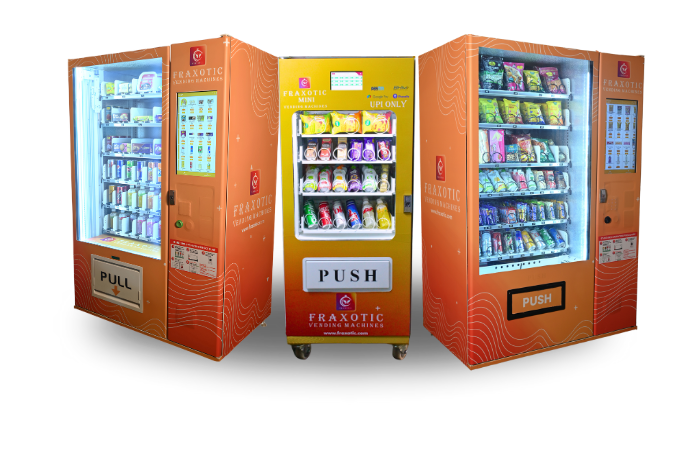
Fraxotic has deployed 1,000+ machines since 2019 and rents on a dry-rental model — you stock it, you keep 100% of the product revenue, and the written SLA covers uptime, response, and resolution. Compare the full terms at fraxotic.com/vending-machine-on-rent, or message us directly on WhatsApp with your site details for a quote.